
Baby Care & Babysitter Game
Aflatoon GameEducational
3.56.00 Reviews
- Version
- 1.0.0
- Installs
- 1.00M
- Age Rating
- Everyone
Screenshots


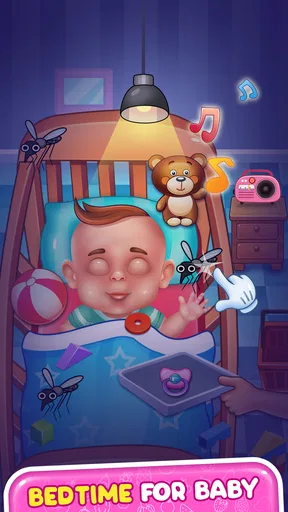
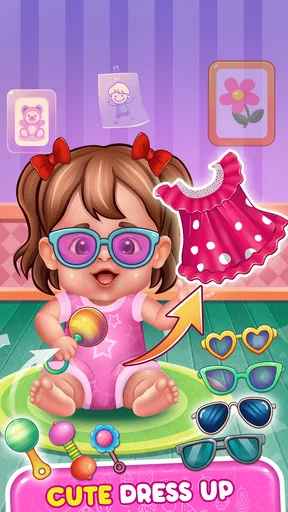
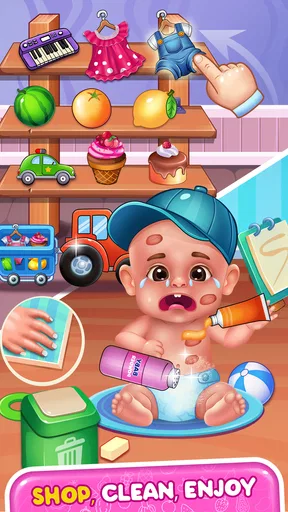
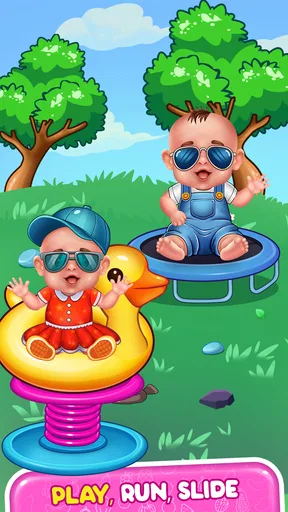

Our Review of Baby Care & Babysitter Game
 Analysis by Appyee
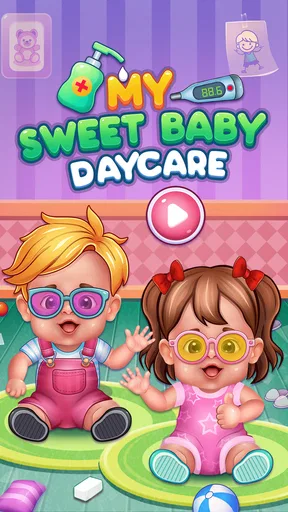
I spent time with Baby Care & Babysitter Game to see whether its childcare theme offers more than a quick, colorful distraction. It is a free educational game from Aflatoon Game, built around looking after babies and handling daycare-style activities. The idea is immediately understandable: you step into a babysitter role, respond to simple care situations, and keep the play focused on everyday routines rather than combat, racing, or complicated strategy.
That straightforward setup is the main reason the game is easy to approach. A child does not need to learn a long backstory before starting, and a parent can quickly understand the kind of pretend play involved. At the same time, I would not mistake the educational label for a full early-learning curriculum. Its strongest value is guided role-play and routine recognition, not deep teaching in reading, mathematics, or science.
How the childcare play feels in everyday use
The most useful way to think about this game is as a digital practice space for familiar caregiving tasks. Instead of presenting abstract lessons, it places the player in the position of someone responsible for babies and daycare activities. That framing gives ordinary actions a purpose: the player is not simply tapping through isolated screens, but trying to keep a small care environment running smoothly.
In my experience, this makes the game more approachable for children who enjoy pretend play. A child who likes dolls, toy kitchens, or playing “daycare” with siblings may understand the theme immediately. The game also gives adults an easy conversation starter. After a play session, you can ask what the baby needed, what the player did first, and why a particular task mattered. Those questions turn a short game into a small activity about attention, sequencing, and responsibility.
One realistic use case is a quiet waiting period before dinner or during a short trip. I would offer it when a child wants something interactive but does not need a long, demanding game. The childcare setting is familiar enough to work in short sessions, and the free access makes it easier to try without turning the decision into a purchase commitment. It is less suitable when you want a structured lesson with measurable progress or a game that can hold an older child’s attention for a long stretch.
The game’s audience is also clear from its content rating. It is marked for Everyone, which makes it a natural candidate for families looking for age-appropriate pretend play. That label is useful as a first filter, but I still recommend that adults watch a new player’s first session. Children differ in how they react to timed pressure, repeated care tasks, or any situation where a virtual baby appears unhappy. A quick check lets you decide whether the tone suits your child.
What the free experience is actually worth
The price is one of the easiest parts of the decision: the game is free. That means the basic trial is financially simple. You can install it, see whether the controls and presentation suit your child, and remove it if the experience does not fit your household. I would describe that as good practical value for families who want to explore a babysitter-themed game without paying upfront.
Free access does not automatically make a game valuable, though. The real question is whether the play offers enough variety and involvement to justify returning to it. Here, the value depends heavily on the player. A younger child who enjoys repeating familiar care routines may find the theme satisfying. A player expecting a large simulation, detailed customization, or a long progression system may find the experience too lightweight.
I also keep the educational claim in proportion. The game can support conversations about caring for others, following a sequence, and noticing needs. Those are worthwhile skills to practice informally. However, I would use it alongside real-world activities rather than as a replacement for them. Letting a child help prepare a snack, organize toys, or choose clothes for a doll can add the social and physical context that a screen cannot provide.
Because the game is free, parents can make the value decision based on fit rather than on recovering a purchase price. That is different from a paid educational title, where a larger lesson library or a carefully designed progression may justify the cost. With this game, I would judge it by whether the child returns voluntarily, stays engaged without constant adult prompting, and can explain what they are doing during play.
Simple play, useful routines, and the limits of repetition
The clearest strength is accessibility. A childcare theme gives the player an obvious role, and that role can make simple interactions feel meaningful. The player is encouraged to think about another character’s needs rather than only chasing points or winning against an opponent. For younger users, that change in focus can make the game feel calmer and more relatable than many action-oriented alternatives.
There is also a subtle benefit in using the game as a sequencing prompt. I would encourage a child to describe a routine aloud before carrying it out: notice the problem, choose a response, and check whether the baby is comfortable afterward. Even if the game itself keeps the interaction simple, this approach adds reasoning without changing the app. It is one of the better ways to turn a basic babysitter scenario into a more thoughtful activity.
The trade-off is that repetition can become noticeable. Childcare games often rely on familiar cycles, and that can be comforting for a young player but predictable for someone seeking constant novelty. I would not choose this as the main game for a child who quickly loses interest unless the caregiving theme is already a strong preference. A broader simulation or a more varied educational game may offer better long-term engagement for that audience.
Another limitation is that pretend responsibility is not the same as real caregiving knowledge. A child may enjoy completing a virtual activity without learning why actual babies need particular care or why adult supervision matters. I would avoid presenting the game as training for babysitting. It is imaginative play with an educational flavor, not a substitute for guidance from a parent or qualified caregiver.
The current version is 1.0.0, so I approach it as an early version of the experience rather than assuming it has the depth of a mature franchise. That does not make it a poor choice, but it does affect expectations. I would be comfortable recommending a trial, while being more cautious about promising a child months of fresh content.
How it compares with ordinary alternatives
Compared with a general puzzle game, this title offers a stronger social and role-play context. A puzzle may sharpen matching, memory, or problem-solving more directly, while this game is better suited to conversations about routines and caring for someone else. The best choice depends on the goal. If you want a focused cognitive exercise, a dedicated puzzle app may be more precise. If you want a gentle babysitter scenario, this game is the more natural fit.
Compared with a doll or pretend daycare set, the game is more convenient and easier to use in a small space. It can provide an immediate scenario without needing toys, cleanup, or a play area. The physical alternative still wins for shared play, imagination without screen time, and hands-on practice. I see the app as a supplement to that kind of play, not a replacement.
Compared with a deeper life simulation, this game should be easier for a young player to understand, but probably less satisfying for someone who wants open-ended management. A larger simulation may offer more decisions and customization, yet it can also introduce clutter, complicated menus, or distractions from the central care theme. Baby Care & Babysitter Game is more appealing when simplicity is a feature rather than a weakness.
It also differs from formal educational software. A curriculum-based app usually makes its learning objectives more explicit and may organize activities around a progression. This game’s learning comes through context and repetition. That makes it friendlier for relaxed play, but less appropriate if a parent is looking for a specific academic outcome.
Who will get the most from it
I think the strongest audience is younger children who already enjoy caregiving stories and can follow simple interactive instructions. The Everyone rating supports that broad positioning, and the daycare setting gives the player a role that is easy to explain. It can also work for a child who needs a calm change of pace after more competitive games.
Parents can get more value by joining briefly instead of handing over the device and walking away. Ask the child to predict what the baby might need, explain the order of actions, or invent a short story around the daycare. This does not require a long lesson. Even a few questions can turn passive tapping into language practice and shared attention.
There is a particularly useful opportunity for sibling play. One child can describe the situation while another decides what to do, then they can switch roles. That approach encourages communication and makes the game less solitary. It also reveals whether the experience has enough flexibility for cooperative imagination or whether it works better as a one-player routine.
I would skip it for older children who want complex management, strong competition, or a clearly measurable academic challenge. I would also look elsewhere if your priority is screen-free play, detailed factual childcare instruction, or a substantial long-term progression. Free access removes the financial barrier, but it does not remove those fit-related limitations.
Practical details before installing
The game is available for Android devices running version 6.0 or later. That minimum makes it accessible on a range of older compatible phones and tablets, although the actual comfort of play will still depend on the device’s screen size and responsiveness. For a child, a larger screen may make small interactions easier and reduce the need for constant adult help.
Aflatoon Game is the developer behind the title. The game has passed one million installs, which suggests that the concept has reached a sizable audience. Its average rating is 3.5 from roughly four hundred ratings, so I would read that as a mixed but viable signal rather than treating it as an automatic recommendation. The small number of written reviews means the score gives only a broad impression; my decision would still rely on trying the free game with the intended player.
The release date is January 5, 2026, and the version shown is 1.0.0. Those details matter because they set expectations around maturity. I would check the experience after installation and pay attention to how smoothly the child can move through the activities. If the controls feel unclear, the game may require more supervision than its simple theme suggests.
I would also establish a short play boundary before handing over the device. This is not because the game is unusually demanding, but because caregiving play can become repetitive and children may continue tapping simply because the next task is available. A timer, a clear stopping point, or a transition into a real-world activity helps keep the game in its proper role.
My recommendation after weighing the trade-offs
My recommendation is to try it when you want free, gentle pretend play with a childcare focus, but keep expectations modest. The game’s best quality is its clear role: the player is caring for babies and managing daycare-style moments. That gives younger users a relatable setting and gives parents several ways to extend the experience through conversation and real-life routines.
I would not call it the right choice for every educational need. It is not the first app I would select for structured literacy, mathematics, or advanced problem-solving. It is also not the best alternative to hands-on pretend play when you have the time and space for that. Its value comes from convenience, accessibility, and the emotional familiarity of the babysitter theme.
For a family deciding whether to install it, the free price makes the answer uncomplicated: test it with the child who is most likely to enjoy caring for virtual babies. Watch whether the player understands the routine, remains interested, and can talk about the choices being made. If those signs are present, the game can earn a place as a short activity between other forms of play.
My final view is positive but measured. Baby Care & Babysitter Game is a reasonable free educational game for younger children who like nurturing scenarios, and its broad age rating makes it easy to consider. I would recommend it as a lightweight companion to real-world play, not as a complete learning solution or a deep simulation. If that distinction matches what you want, Baby Care & Babysitter Game is worth trying; if you need depth, academic structure, or lasting variety, choose a more specialized alternative instead.
Verdict
Strengths of Baby Care & Babysitter Game
- Simple controls make it easy for young children to play independently.
- Caring tasks offer gentle, age-appropriate pretend-play activities.
- Bright visuals and cute characters keep the experience engaging.
- Short activities suit quick play sessions and limited attention spans.
- Offline access makes it convenient for travel or areas without internet.
Limitations of Baby Care & Babysitter Game
- Some activities may feel repetitive after several play sessions.
- Frequent prompts can make the game feel less relaxing for parents.
- The game may be too simple for older children seeking more challenge.
- Certain features or items may require in-app purchases to unlock.
- Sound effects can become distracting without adjusting the audio settings.
Similar Picks in This Category
View All
Little Panda Policeman
BabyBus4.0

Monster Trucks Game for Kids 2
Raz Games4.1

Little Panda's Chinese Recipes
BabyBus4.4

Little Panda's Restaurant
BabyBus4.4

Little Panda's Ice Cream Games
BabyBus4.3

Baby Panda Care
BabyBus3.8
Frequently Asked Questions
What is Baby Care & Babysitter Game about?
Baby Care & Babysitter Game is a casual simulation game in which you look after virtual babies and complete everyday childcare activities. Depending on the available level, you may feed, bathe, dress, entertain, soothe, and put the baby to sleep. It is designed as a simple, family-friendly experience with colorful visuals and easy controls rather than a realistic parenting simulator.
Is Baby Care & Babysitter Game suitable for children?
The game is generally aimed at children and casual players who enjoy nurturing and role-playing activities. Its tasks are straightforward, and the interface is usually easy to understand without advanced gaming experience. Parents should still check the current age rating, advertising settings, and in-app purchase information on Google Play or the App Store, since store policies and content can change over time.
Can Baby Care & Babysitter Game be played offline?
Some basic babysitting activities may work without a continuous internet connection, which is convenient for travel or limited-data situations. However, an internet connection may still be required for the first download, advertisements, updates, cloud features, or restoring purchases. Because offline behavior can vary between versions and devices, it is best to test the game once after installation before relying on it without Wi-Fi.
Does the game include ads or in-app purchases?
Baby Care & Babysitter Game may use advertising or optional in-app purchases, as is common with free mobile games. Ads can appear between activities or when unlocking certain rewards, while purchases may remove advertisements or provide additional items and content. Before downloading, review the store listing carefully and consider enabling parental controls if children will be playing on a shared device.
What devices are compatible with Baby Care & Babysitter Game?
Compatibility depends on the particular Android or iOS version and the developer’s latest requirements. Most supported phones and tablets should run the game if they have enough free storage, an up-to-date operating system, and adequate memory. Check the official store page for the exact minimum version, download size, and device restrictions before installing, especially on older phones or tablets.
Play our best games!


